
The Kimberley
Where these tours take you
Background on the country we travel through, written for guests planning a trip north.
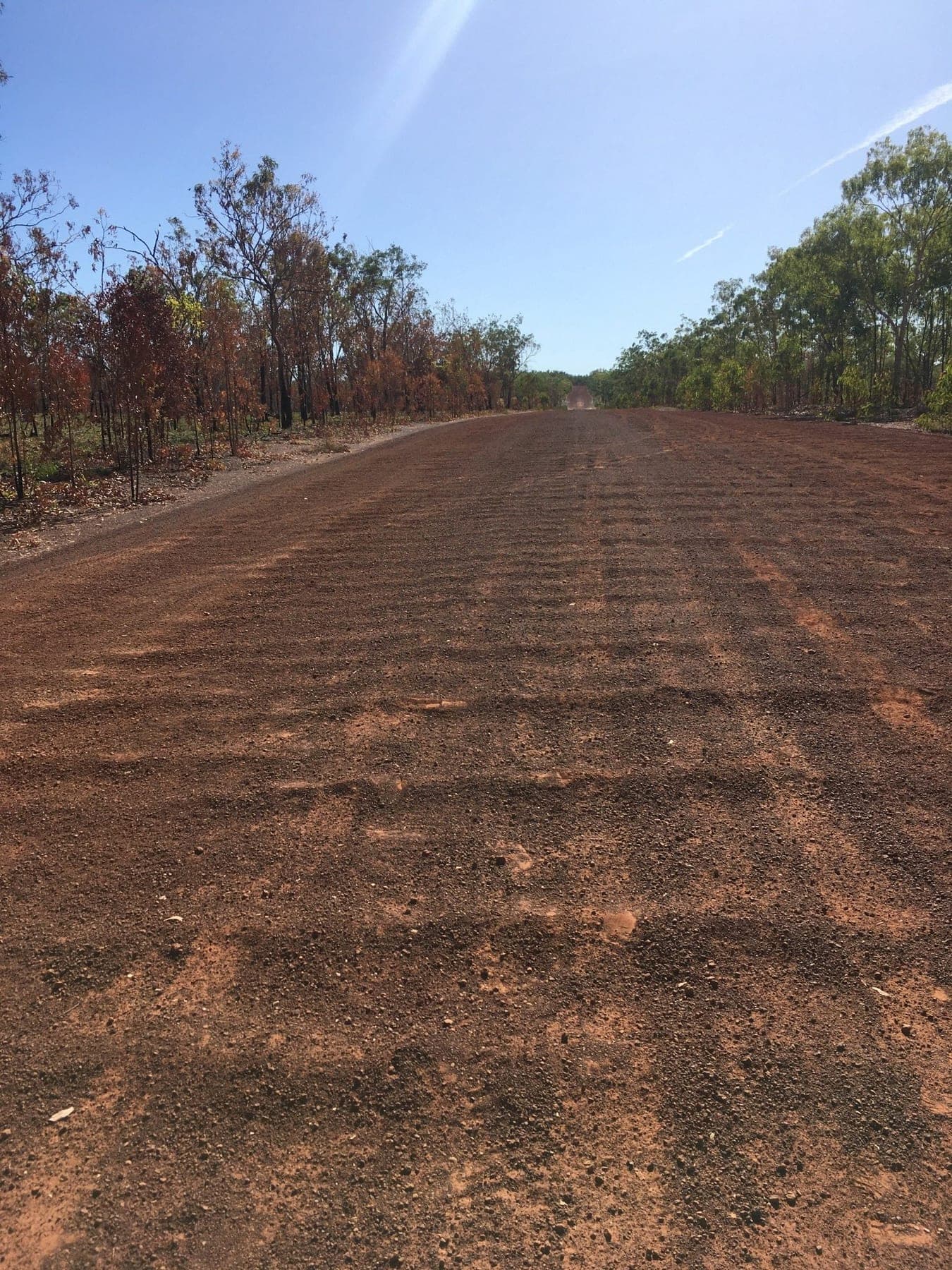
The Gibb River Road
The Gibb River Road runs diagonally across the Kimberley between Derby in the west and Kununurra in the east, and it remains the best way to experience the region up close.
It is a rough road in places — which is why our coaches run upgraded suspension — and it is impassable in the wet, when the rivers that cross it are running. We travel it in the dry season, once the crossings are clear.
Along it you will find magnificent gorges, rivers and waterholes, ancient rock art hidden in the rocky bluffs, and mornings that begin with an extraordinary range of bird calls before the sun clears the horizon.
Windjana Gorge
Devonian reef walls above the Lennard River, with freshwater crocodiles basking on the banks.
Tunnel Creek
A walk right through the Napier Range, wading a cave system carved by the creek.
Bell Gorge
One of the Kimberley’s iconic waterfalls, with a deep pool to swim beneath it.
Manning Gorge
A walk across the river and over the rock to a waterfall that rewards the effort.
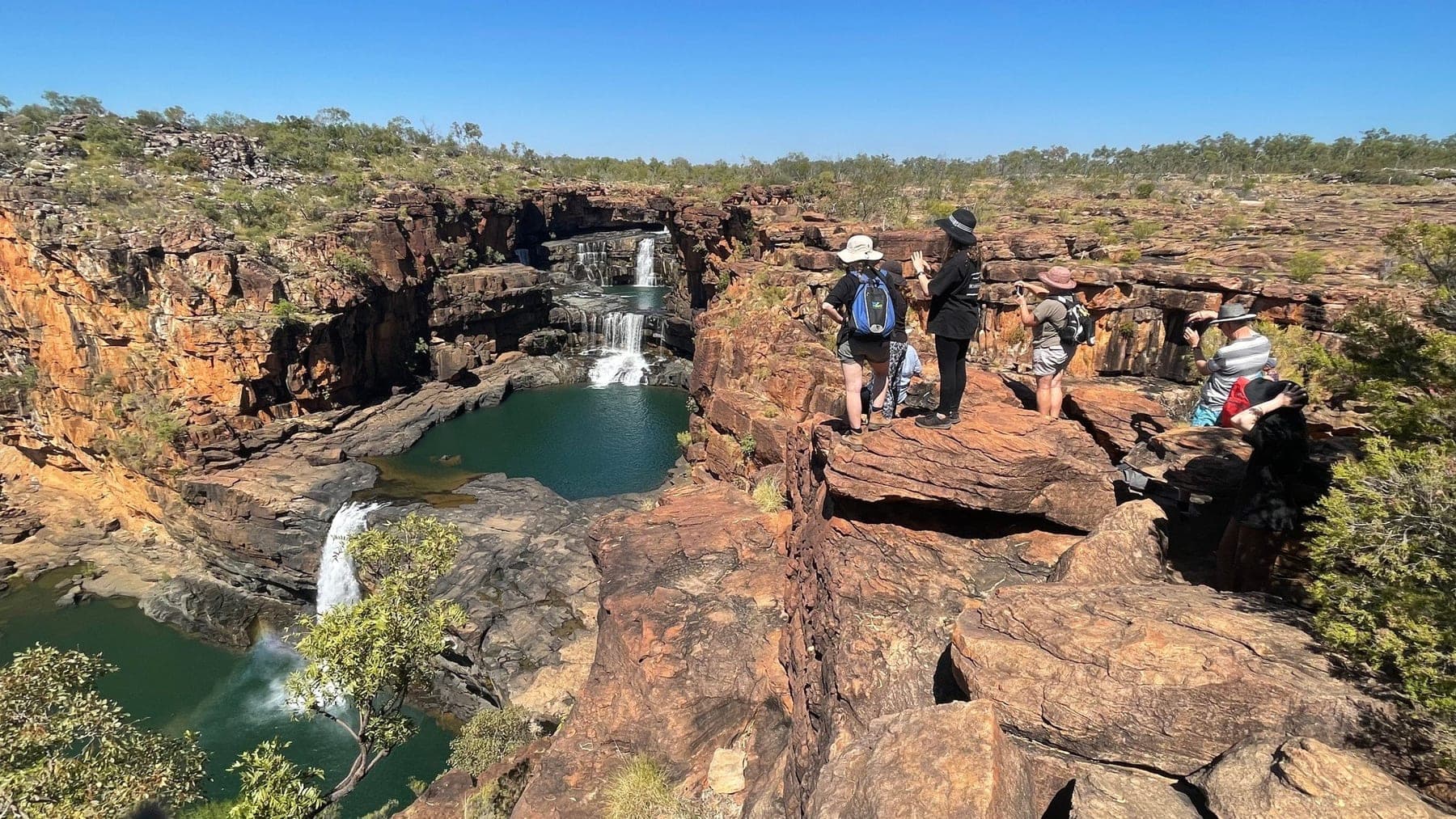
Mitchell Falls & the Mitchell Plateau
The Mitchell Plateau sits well off the Gibb, up a remote and corrugated track that most travellers never attempt. It is worth every kilometre.
We camp two nights on the King Edward River, which gives you time to swim and relax between the two great highlights: the rock art galleries at Munurru, and Mitchell Falls itself.
We only visit the falls between May and August, when the water is still running well after the wet season. Every guest on our Broome loop tours gets a free helicopter flight over the falls.
Munurru rock art
Wandjina and Gwion Gwion galleries, among the most significant rock art in Australia.
The falls walk
A few hours through Livistona palms and across the river, with swimming along the way.
The flight back
A helicopter flight over the falls is included — the only way to see all four tiers at once.
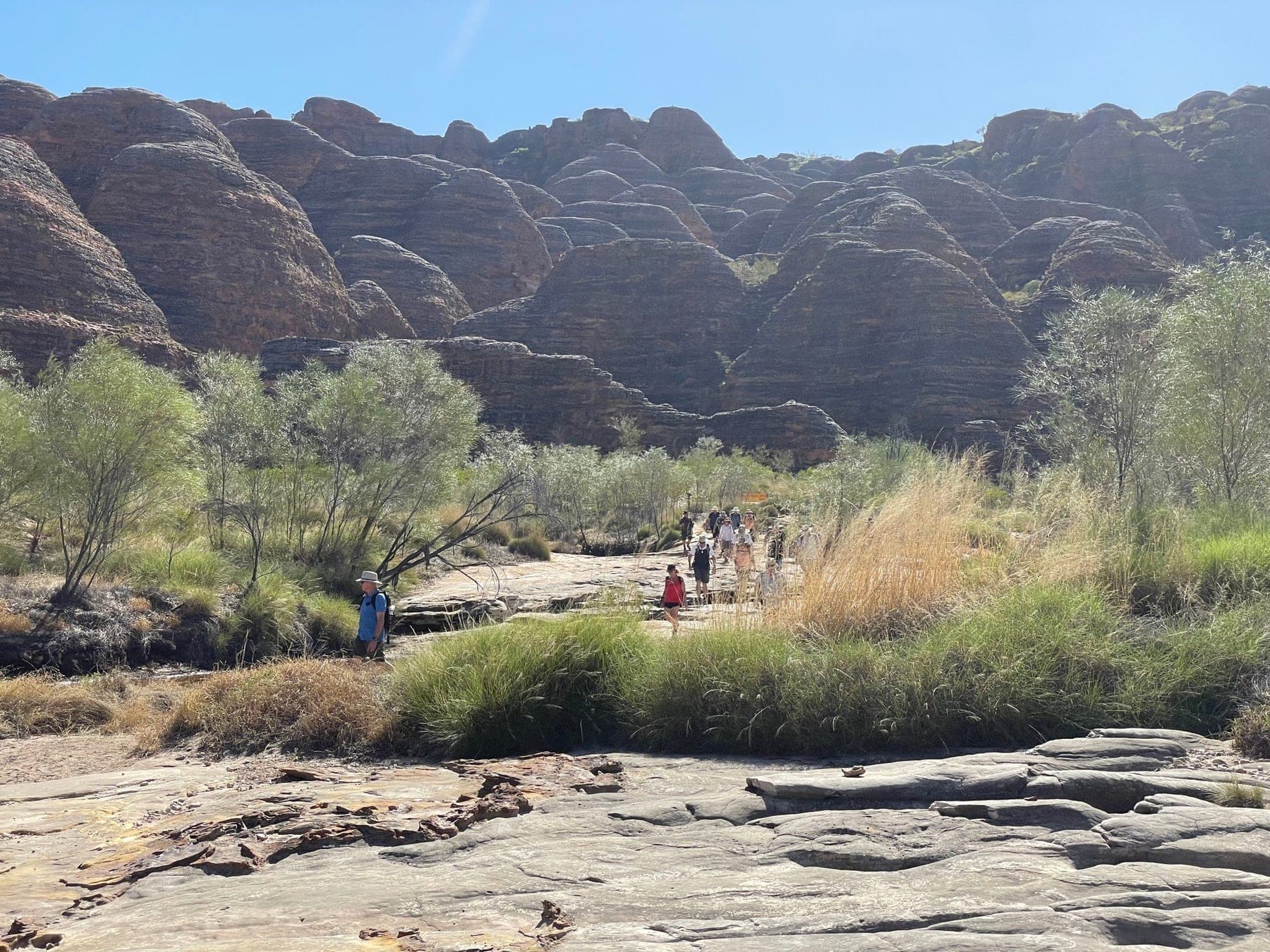
Purnululu & the Bungle Bungles
The banded beehive domes of Purnululu were unknown to most of the world until the 1980s, and remain one of the most distinctive landscapes in Australia.
We spend two days here — walking the wide rock slabs of Piccaninny Creek to the natural amphitheatre of Cathedral Gorge, and heading to the northern end for Echidna Chasm, where Livistona palms lean out of a slot barely wide enough to walk through.
A scenic helicopter flight over the range is available as an optional extra, and it is a good one.
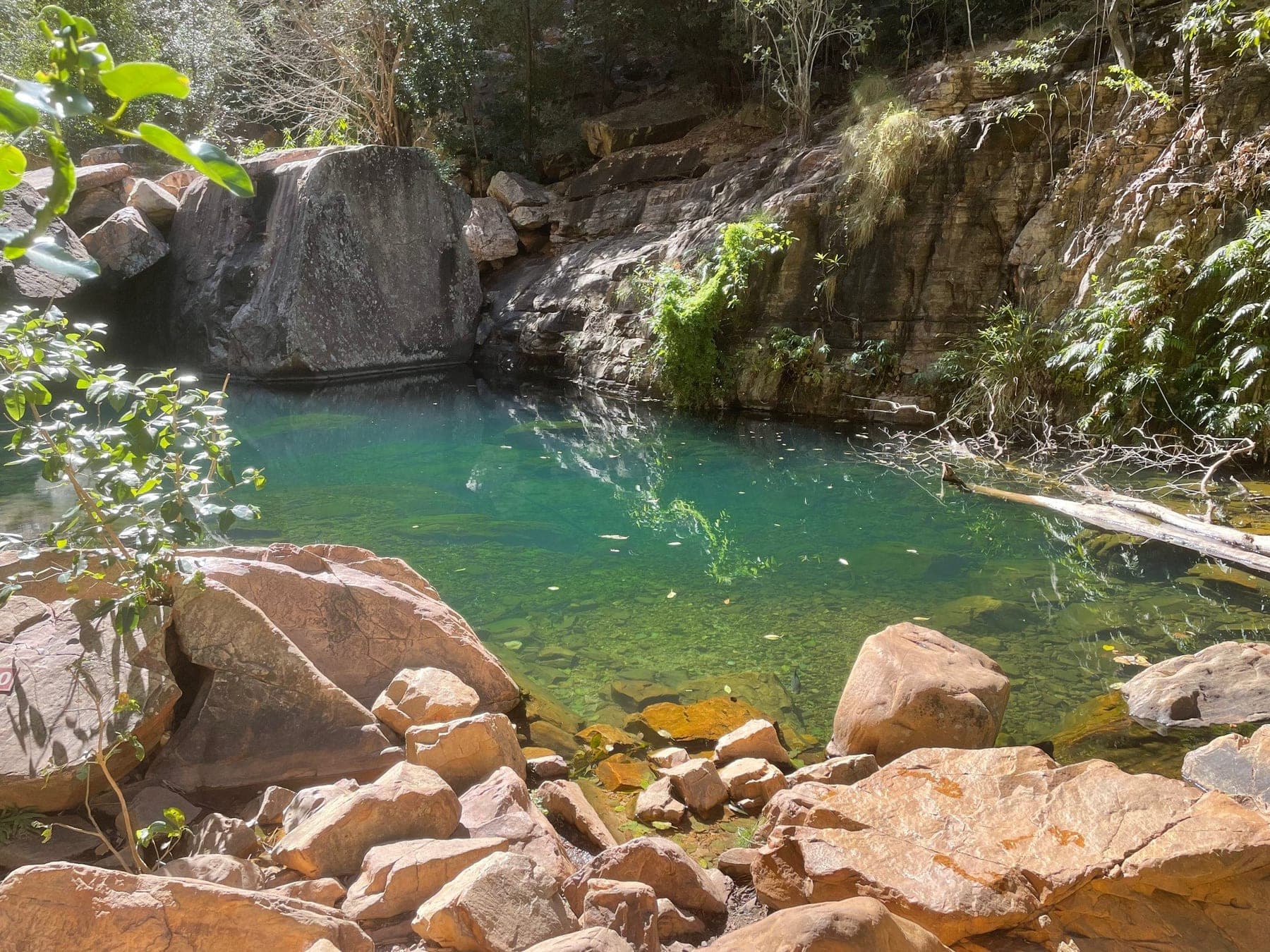
Broome
Broome is where most of our Kimberley tours begin and end — a pearling port on Roebuck Bay with a genuinely multicultural history.
It is worth arriving a day or two early. Cable Beach runs for miles of white sand and turquoise water; Gantheaume Point holds dinosaur footprints visible at low tide; and Sun Pictures has been showing films outdoors since 1916.
If your dates line up with a full moon between March and October, head to Town Beach for the Staircase to the Moon.
Cable Beach
Twenty-two kilometres of white sand, and the classic sunset camel trains.
Chinatown
The commercial centre — galleries, pearl showrooms and somewhere to eat.
Gantheaume Point
Red cliffs against white sand, and dinosaur prints at low tide.
Staircase to the Moon
The full moon rising over the Roebuck Bay mudflats, March to October.
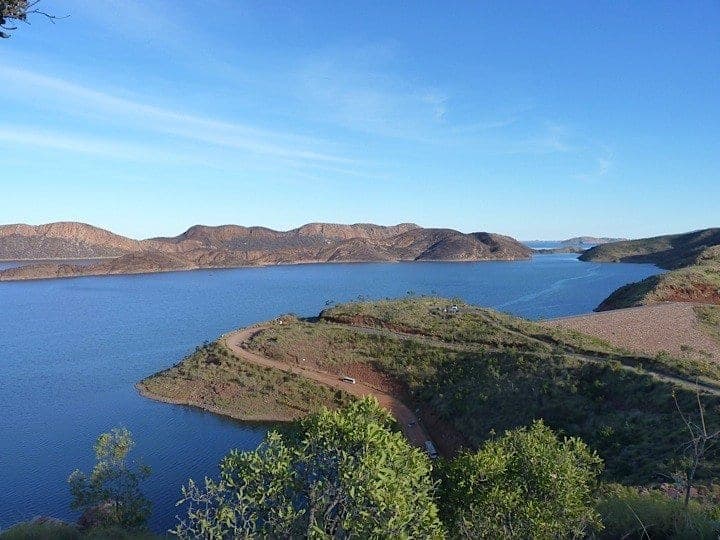
Kununurra & Lake Argyle
Kununurra sits in the Kimberley’s north-east corner, surrounded by the rugged red of the Carr Boyd and Cockburn Ranges and the immense waterways of the Ord River.
Nearby Lake Argyle is the largest freshwater reservoir in Australia — big enough that its islands were hilltops before the dam. We stay two nights, which leaves time for swimming, walks and the sunset cruise that is included on tours visiting the lake.
El Questro Wilderness Park is close by, with Emma Gorge and the palm-fringed thermal pools of Zebedee Hot Springs.
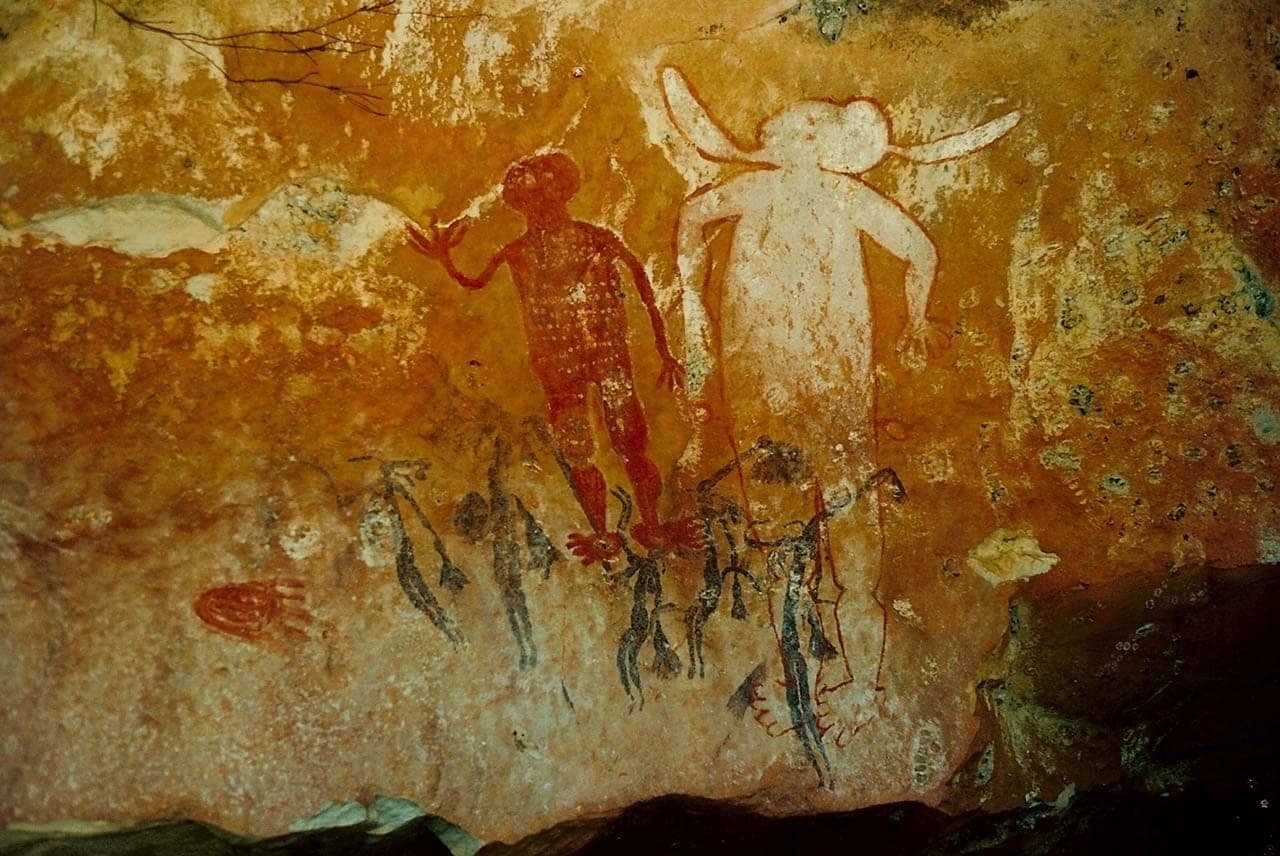
Aboriginal rock art
The Kimberley holds some of the oldest and most significant rock art in the world, and seeing it in place — rather than in a book — is one of the things guests talk about most afterwards.
You will see two distinct traditions. Wandjina figures, with their haloed heads and large dark eyes, are the ancestral cloud and rain spirits of the region. The older Gwion Gwion figures are finely drawn, in ochre, and extraordinarily detailed.
These are living cultural sites on country belonging to their traditional owners. We visit with permits, we take only photographs, and we follow the protocols of the communities who care for them.
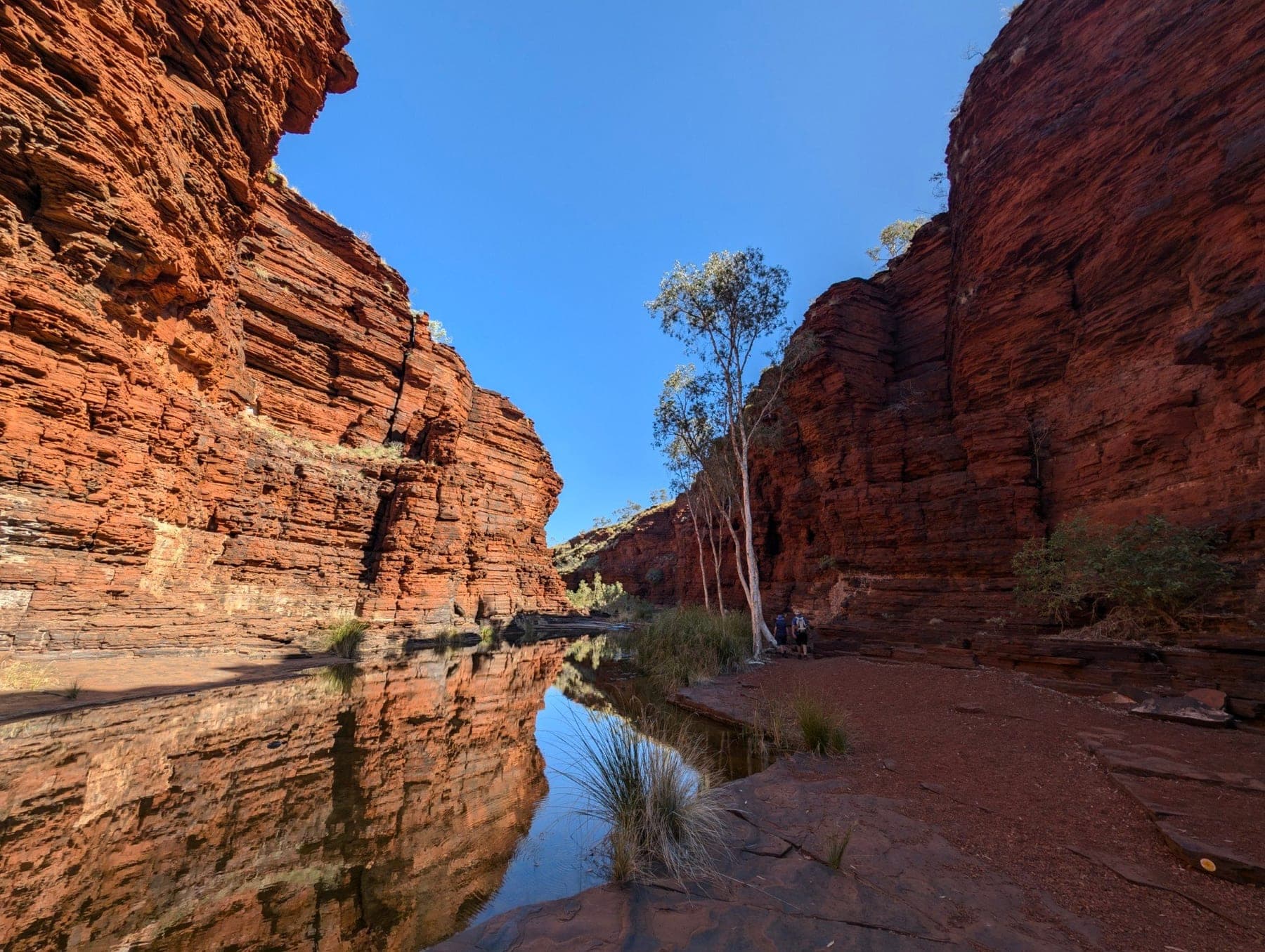
Karijini & the Coral Coast
Our coastal tours between Perth and Broome take in a completely different side of Western Australia — and pair well with a Kimberley loop.
Karijini National Park is gorge country at its best: Fortescue Falls, Fern Pool, Hancock and Weano, and lookouts where the rock drops away beneath you. Inland, red earth and spinifex run to the horizon.
On the coast, the Ningaloo Reef comes right up to the beach — you can walk in at Turquoise Bay and snorkel over coral. Add the dolphins at Monkey Mia, the cliffs at Kalbarri and the limestone spires of the Pinnacles, and it is a fortnight of genuine variety.
Karijini National Park
Dales Gorge, Fern Pool, Hancock, Weano, Knox and Hamersley.
Ningaloo Reef
Snorkel straight off the beach; whale sharks visit in April and May.
Monkey Mia
Wild dolphins that come into the shallows most mornings.
The Pinnacles
Thousands of limestone spires in the sand at Nambung National Park.
Planning
Before you go
When to travel
We run Kimberley tours from May to August, in the dry season. Mitchell Falls is at its best early in that window, when the water is still high after the wet.
Getting here
Broome and Perth are both served by direct flights from most Australian capitals. Book flights once your seat is confirmed, not before.
How fit do I need to be?
Comfortable walking a few kilometres over uneven rock, most days. Nobody is racing — but the gorges do have to be walked into.
What it costs
Park fees, camping, most meals and the headline inclusions are all in the tour price. Optional flights and cruises are extra.
Ready to see it for yourself?
Browse the tours, or read the FAQs if you still have questions about fitness, camping or what to pack.